
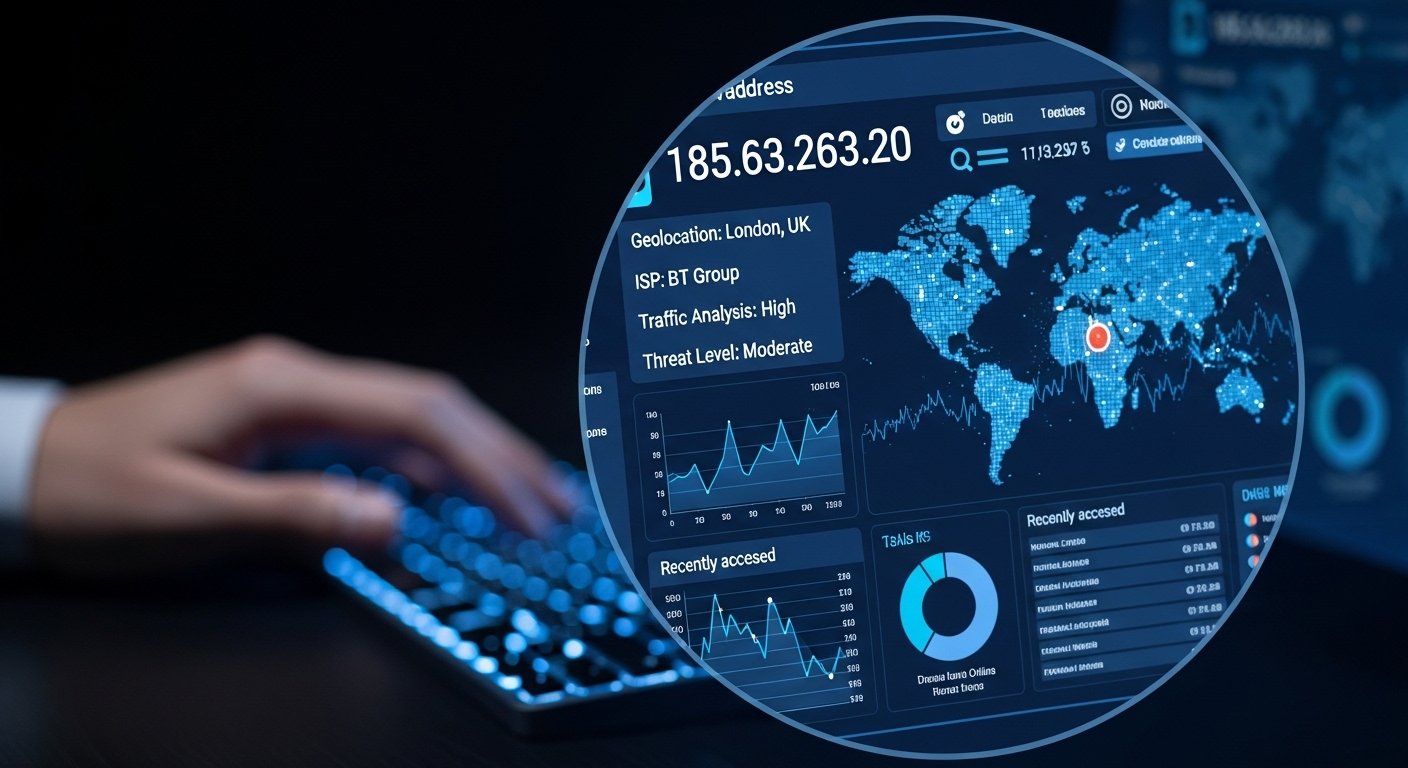
In today’s digital world, every device connected to the internet is identified by a unique IP address, and 185.63.263.20 is one such identifier that can raise questions for website owners, cybersecurity professionals, and everyday users. Whether you discovered it in your server logs or through a security alert, understanding what it represents and how to interpret it is essential.
What Is an IP Address?
An IP (Internet Protocol) address is a numerical label assigned to devices connected to a network. It enables communication between systems by identifying both the sender and receiver of data. IPv4 addresses, like 185.63.263.20, consist of four sets of numbers separated by dots.
Each segment helps route information across the internet. When someone visits your website, sends an email, or attempts to log into a server, their activity is recorded with an IP address. That is why entries such as 185.63.263.20 often appear in hosting dashboards, firewall logs, or analytics tools.
Breaking Down 185.63.263.20
The structure of 185.63.263.20 follows the IPv4 format. However, it’s important to note that technically valid IPv4 segments range from 0 to 255. When an IP appears outside that range, it may indicate one of several possibilities:
- A logging error
- A masked or modified IP
- A spoofed address
- A placeholder used in testing environments
Because of this, seeing 185.63.263.20 in your logs does not automatically confirm legitimate traffic. It requires deeper inspection.
Why Would 185.63.263.20 Appear in Server Logs?
There are several scenarios where 185.63.263.20 might show up in your monitoring systems:
1. Automated Bot Activity
Websites constantly receive visits from bots. Some are harmless search engine crawlers, while others scan for vulnerabilities. If 185.63.263.20 appears repeatedly with rapid requests, it may be associated with automated scripts.
2. Security Scanning Attempts
Cybersecurity scanners probe servers to detect open ports, outdated plugins, or weak login pages. An address like 185.63.263.20 could be tied to such activity, especially if requests target administrative URLs.
3. Spoofed or Invalid IP Logging
Because 185.63.263.20 contains a numerical range outside the standard IPv4 limit, it may be artificially generated. Attackers sometimes manipulate headers to disguise their real origin.
How to Investigate 185.63.263.20 Safely
When you encounter 185.63.263.20, avoid making assumptions. Follow a structured approach:
Review Access Logs
Check timestamps, requested URLs, response codes, and user agents. Look for patterns. If 185.63.263.20 made hundreds of requests within seconds, it suggests automation.
Examine Server Headers
Inspect the request headers for irregularities. Spoofed IP addresses often contain mismatched forwarding headers or unusual formatting.
Monitor Behavior Over Time
If 185.63.263.20 appears once, it may be random noise. Repeated activity across different days indicates a pattern worth analyzing.
Is 185.63.263.20 Dangerous?
An IP address alone is not inherently dangerous. Risk depends on behavior. If 185.63.263.20 is associated with login attempts, SQL injection patterns, or unusual file access, then it becomes a concern.
However, if it appears once in a harmless request for a public page, it may simply be malformed logging data. Context is everything in cybersecurity analysis.
Best Practices When Handling Suspicious IP Addresses
If you believe 185.63.263.20 is linked to malicious activity, take these steps:
Implement Firewall Rules
You can block suspicious IP ranges at the server or application level. Many hosting providers allow IP filtering through control panels.
Enable Rate Limiting
Rate limiting prevents excessive repeated requests from overwhelming your server. If 185.63.263.20 is sending high-volume traffic, this method can neutralize it.
Keep Software Updated
Outdated CMS platforms and plugins attract scanning bots. Regular updates reduce vulnerabilities regardless of whether 185.63.263.20 is malicious or not.
Use Intrusion Detection Systems
Modern intrusion detection tools analyze patterns rather than just single IP entries. They provide a broader perspective beyond isolated addresses like 185.63.263.20.
Understanding IP Spoofing and Logging Errors
IP spoofing involves falsifying the source address in network packets. Attackers do this to hide their identity or test server behavior. If 185.63.263.20 is technically invalid, spoofing becomes a realistic explanation.
Logging systems can also misinterpret forwarded headers or proxy chains. In such cases, 185.63.263.20 might not represent a real machine but rather a malformed data entry.
When to Take Immediate Action
You should act quickly if:
- 185.63.263.20 attempts repeated login failures
- It targets sensitive directories like /admin or /wp-login
- It triggers firewall alerts
- It appears in brute-force attempt logs
In these cases, blocking and further investigation are justified.
Final Thoughts on 185.63.263.20
Encountering 185.63.263.20 in your logs can be confusing, especially if you are unsure whether it represents legitimate traffic or a spoofed entry. The key is not panic but analysis. IP addresses provide clues, not conclusions.
By reviewing access logs, identifying behavioral patterns, and applying basic security hygiene, you can determine whether 185.63.263.20 poses a risk. Even if it turns out to be a malformed or spoofed entry, the process of investigating strengthens your overall security posture.
Understanding how addresses like 185.63.263.20 function within internet infrastructure empowers you to respond intelligently rather than react emotionally. In cybersecurity, awareness and consistency always outperform guesswork.